|
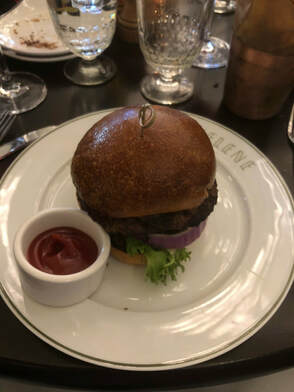
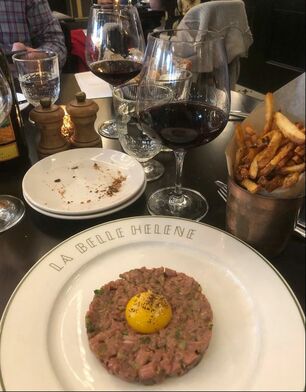
To view the other posts in this 3-part series on MTG finance speculation, click the links below: Magic: The Gathering Finance Part 1: An Introduction and Analytical Test for Speculating Magic: The Gathering Finance Part 2: Analyzing Speculation Targets and Lowering Costs I originally bought $188.11 of Magic: The Gathering cards in April as a speculation test. I have currently sold about 56% of my speculated cards as of May 31st, 2019. Here is a link to my updated speculation spreadsheet. I added a key tab to understand better how to interpret the data. I have sold or buylisted several cards due to price increases, price spikes, and price stagnation. When buylisting, I divided shipping fees across all cards mailed to Card Kingdom in Seattle, Washington. While I have made money thus far, I also lost money on a few cards. Overall, my current net profit is $26.12, or a 20% return. I will cover some of the hits, misses, and observations during the first eight weeks of this speculation test. 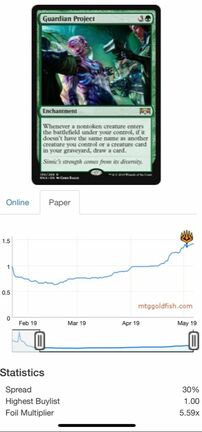 Pricing graph from MTG Goldfish Pricing graph from MTG Goldfish Hits Tithe Taker was bought at an average price of $1.06 and buylisted at a net price of $1.71. This 62% ($1.96) profit gain happened due to its steady growth and new demand from the Unified Assault challenger deck. I covered my analysis and decisions on this card in the previous article. After selling the Tithe Takers, the buylist price rose to $2.00 each as of May 7th, 2019. I also correctly called Unbreakable Formation increasing in value. The buylist price for foils rose from $0.33 to $0.99 in three weeks. Unfortunately, I paid too much and sold the copy at a slight loss. While I thought this card hit a price ceiling, the buylist price increased to $1.25 as of May 7th, 2019. It is easy to get upset knowing you could have made more money. However, cashing out for a considerable profit is not bad as card prices can quickly decrease for buylists. Guardian Project was another successful speculation. I saw people talking about the power of this card in Elder Dragon Highlander. I also watched the price move from $0.35 to $0.75 in two weeks. On May 7th, 2019, copies were selling on TCGPlayer for an average price of $1.44. I saw foil copies selling fast on TCGPlayer and Card Kingdom with a low multiplier. I bought a foil copy for $3.15 due to the rising EDH popularity and buylisted a few weeks later at $4.45. Guardian Project returned a profit of 41%, or $1.30. This card would have also been an excellent bulk buy at $0.50. Current copies of non-foils are buylisting for about $0.80 each. I would not attempt to buy deep into non-foils now. However, it may be an excellent opportunity to purchase cheap foils for a long-term hold. 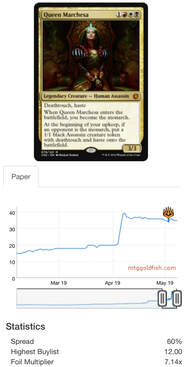 Pricing Graph from MTG Goldfish Pricing Graph from MTG Goldfish Queen Marchesa was a massive win off of a promotional opportunity. There was a Google Express promotion for 20% off your first order in April. I purchased multiple copies Queen Marchesa the day after it spiked to $17.10 each. I thought Queen Marchesa was going to be an easy flip. However, the buylist price quickly dropped from $24.00 to $17.25 as other people dumped their stock. The prices on eBay and TCGPlayer began dropping steadily down to around $28.00. It became apparent that the demand for this card was inherently low. I listed the copies on eBay for $27.99 each and ultimately sold all three for a net profit of 31% or $15.83. I purchased four copies of Lux Cannon during the same Google Express promotion at a discounted price of $5.09 each. I patiently waited to sell them as prices rose from $9.00 to $10.00 over a month. I tried selling the set on eBay for $36.99 but had no luck. Finally, I buylisted each copy at a net price of $6.35. I was able to make a profit of 25% or $5.06 from the set. I learned that it is hard to sell EDH cards as a set of four when players need one copy. There was an opportunity to sell each card on eBay for a maximum net price of about $7.25. However, I decided to accept the buylist price of $6.35 instead of taking the risk of mailing without tracking. Misses The most significant losses came from cards that had a high buylist spread. Such cards included Rhythm of the Wild, Sheltered Thicket, and Unbreakable Formation. While two of them did increase in price, the spread was not enough to recoup my initial investment. The other issue with these cards is that I cannot sell them on eBay or another platform for a reasonable profit. The price of each card is too low to sell outside of a face-to-face transaction. My only outlet to deal with the cards was by buylisting at my local store or an online vendor. I would caution against buying cards where the current buylist price, including a store credit option, is not enough to cover your costs. Another miss was selling the Gilded Lotus and Goblin Bombardment too early. I had flagged these cards as long-term holds but sold them a month after purchasing. I grew impatient that the card prices were not rising. Unfortunately, their prices increased a week after I buylisted them. Had I stuck to my original strategy, I would have doubled my total profits on Goblin Bombardment and Gilded Lotus. I recommend being patient when speculating on EDH staples and not try to flip them for a profit immediately. Observations A card's buylist spread heavily influences the likelihood of earning a profit from a short-term hold. The closer my purchase price of a card is to its buylist price, the higher the chance I can make a profit. I have done well-flipping arbitrage opportunities and Standard cards. Many EDH speculations appreciated over time, but not all reached an ideal price point. I will look to move some of them in June after a 60-day holding period. It appears that cards purchased with a high buylist spread, like Skyline Despot and Grafdigger's Cage, will not return a profit. The growth and demand for these cards are slow due to their limited EDH and sideboard use. There will probably be an opportunity in six to eight months where I can break even. If they reach a price point where I can break even by taking store credit, I may buylist them. Regarding buylisting, I have been fortunate enough to mail my speculations with cards from my collection to spread out shipping costs. Thanks to pooling cards together, the average price per card shipped across the United States has been $0.51. A negative consequence of buying inexpensive cards is the limited avenues of selling them for a profit. I either have to buylist cheap cards from a store, sell them in person, or trade them for other cards. It would make more sense in the future to buy larger quantities of low-priced cards to ship together or sell sets on eBay. In addition, it was more time-consuming selling three cards over $25.00 on eBay than buylisting, organizing, and sending many inexpensive cards to one vendor. I want to highlight another topic of MTG card speculation. The condition of a card is critical when determining a card's selling price. Players and vendors can typically agree to a price for a near-mint condition of a card. However, opinions start to change when discussing the price of a card with light play or heavy play wear. Some players are only interested in near-mint cards, while others are less concerned. Many vendors tell you in advance how much discounting they will take-off of a buylist price for cards that are not near mint. I have been very particular about the conditions of cards purchased as speculation targets, especially foil versions. I also bought some cards with light play wear that arrived as near-mint. However, I recommend speculating only on near-mint copies of cards since it is a universal price point among players and vendors. I may not have as much success selling the rest of my speculations, but I am pleased with my profit and performance thus far. If you are interested in other MTG finance topics, I recommend reading my posts on self-fulling prophecies and buying bulk for profitable returns. *The information in this article is my knowledge and opinion and is meant for informational purposes only. I am not a registered financial professional or trying to act as one.* La Belle Helene is an upscale, French brasserie in the Uptown district of Charlotte. The restaurant opened its doors in the summer of 2018. Inside the restaurant, you will immediately notice a long bar area. This is a perfect for a beverage after work with friends or coworkers. The decor inside was beautifully done. I particularly like the large light fixtures and copper pans around the kitchen area. There is indoor, outdoor, and private room seating available. Helene is open for lunch and dinner during the week, but has different hours on the weekend. They do offer a Sunday brunch, which is popular in Charlotte.  Interior of La Belle Helene Helene's menu offers many seafood, beef, chicken, lamb, and meat options. Their lunch menu is on the lighter side and does contain options for some dietary preferences. However, I would not suggest this restaurant for dinner to someone who is vegetarian or vegan. During my recent visit for dinner, our group ordered the Scottish Salmon, LBH Burger American, and Hand Chopped Beef Tartare. I was unimpressed with the portion size of the salmon, but my friend thought the dish was very tasty. My wife and I shared the burger and tartare. Their burger was well spiced and delicious. The artisan bun was a great compliment to the two thin 4 oz. patties. The side of pomme frities were also very good. We thought the beef tartare was good, but not amazing. It was very tender, but not as flavorful as I would have liked. Our other friend also ordered the burger and thought it was wonderful.
The beverage list of wines, beers, and spirits is plentiful. You should have no issue finding something you enjoy during a happy hour or with dinner. One of our friends also enjoys their wine spritzers. My only complaint is that there are very few inexpensive wines available by the glass or bottle. We shared a bottle of Pinot Noir with dinner that was on their lower end of pricing at $48. I like having the ability to order multiple wines around $8-10 a glass and $36-40 a bottle. The service at Helene was above average from everyone we encountered. We had a team of two servers take care of our table. Our water glasses were kept full and food came out in a reasonable amount of time. While our experience at Helene was enjoyable, I felt that our bill was higher than I would have expected. The prices at Helene for food and alcohol are high in my opinion. In addition, we did order the most expensive entrees such as their signature rotisserie chicken or steaks. For the amount of money spent, there are a lot of options around Charlotte. I plan to return to Helene in the future for drinks and dinner. Their location, atmosphere, and dining experience left a good impression. While I felt that we paid too much for our meal, I hope the next visit will change my perspective. 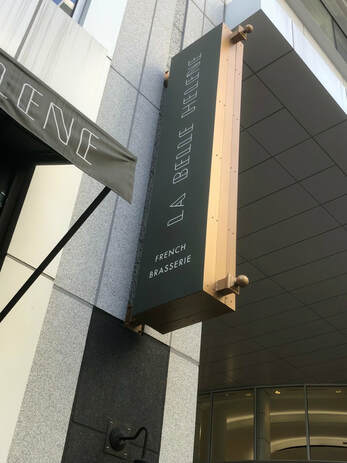 Street Sign I will be attending the Queen City Anime Convention from August 9th – 11th, 2019 in Charlotte, NC. This year, the convention will be held at the Sheraton Charlotte Hotel. You can register in advance at a reduced price until July 9, 2019. I have submitted a request to host a panel on Saturday or Sunday. I will share more details about the convention and a link to the schedule of events when they are available.  My Japan travel panel from 2018 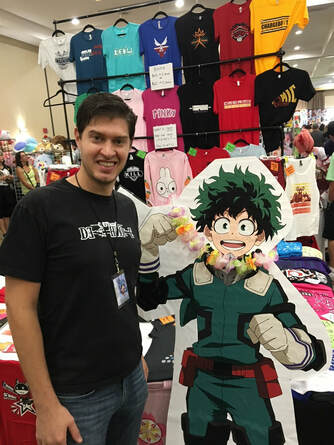 Dealer room from 2018 Spandex City is a hobby store specializing in comics, collectibles, and trading card games. They are located at 2914-A Mt. Holly-Huntersville Road in Charlotte, NC. The shop doubles as an ice cream parlor; carrying a selection of ice cream flavors for a milkshake, sundae, or cone. When visiting Spandex, you will find a few pinball machines and tabletop play space as well. 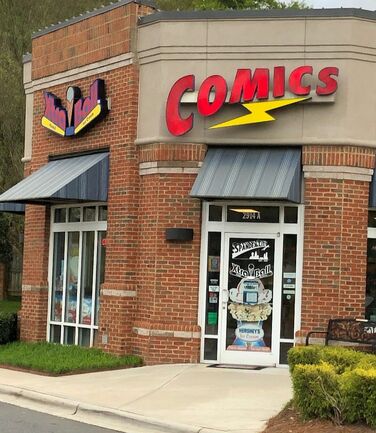 Entrance to Spandex City Spandex is a great place for local comic enthusiasts to purchase new issues and related memorabilia. They can backorder any available comics for customers who missed a new release. In addition to comics, Spandex sells booster packs, boxes, and related trading card game merchandise. You can buy sealed product from the latest set of Pokémon and Magic: The Gathering. If you are interested in planning Pokémon or Magic: The Gathering with other players, Spandex offers multiple events each month. You can check their store calendar (link) to see a list of upcoming events by day. The staff at Spandex do a wonderful job running events for participants of all ages.  About to play Magic: The Gathering with a friend One of the main reasons I visit Spandex is because of their employees. Their manager, Jeremy, is a great person that goes out of his way to ensure each customer has a positive experience. He remembers customers by name and invites them back for a future visit. The other employees at Spandex follow his lead by offering the same level of customer service. I recommend visiting Spandex for all your super hero and trading card game needs in North Charlotte. 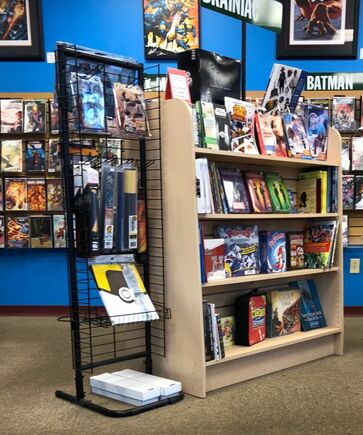 Super hero and Pokémon merchandise |

Follow me
on Instagram @card_knock_life Categories
All
Archives
July 2024
This website contains affiliate links
|
 RSS Feed